How to Can Chicken Soup Safely: Tested Procedure
Home-canned chicken soup is the definition of pantry convenience: open a jar, heat it, and dinner is ready. It is also a project with strict rules, because chicken soup is a low-acid food that must be pressure canned from a tested recipe, with no noodles, no rice, no cream, and no thickeners in the jar. Many beloved chicken soup recipes break at least one of those rules, which is why so many canners get confused about whether their soup is safe to can. This guide sorts it out: what a tested canned chicken soup contains, what it never contains, and how the procedure works from pot to pantry.
The short answer
To can chicken soup safely, follow a tested pressure-canning recipe for chicken soup from the USDA Complete Guide, the NCHFP, or a current Ball or So Easy to Preserve book; can only chicken, vegetables listed in the recipe, and clear broth; leave out noodles, rice, pasta, dumplings, dairy, and thickeners entirely; and process in the jar size the recipe specifies, with the altitude adjustment for your location. This guide does not print processing times or pressures of its own — use the time and pressure in the tested recipe you are following, adjusted with our canning processing times and altitude chart. If your soup does not match a tested recipe, freeze it instead. Frozen chicken soup keeps its noodles, its cream, and its exact flavor, with no safety compromise.
Why chicken soup must be pressure canned
Chicken, vegetables, and broth are all low-acid foods, so chicken soup is firmly in pressure-canner territory. A boiling water bath cannot destroy botulism spores in low-acid food, however long you process it. That is the rule behind water bath vs pressure canning, and it applies to soup just as it applies to plain meat in our canning meat safely guide. It also applies to chicken stock on its own, which is why canning broth and stock safely insists on clear, strained stock and a pressure canner. Soup is not an exception because it is mostly liquid: the solid pieces in the jar change how heat moves, and only a tested pressure process accounts for them.
What a tested chicken soup contains
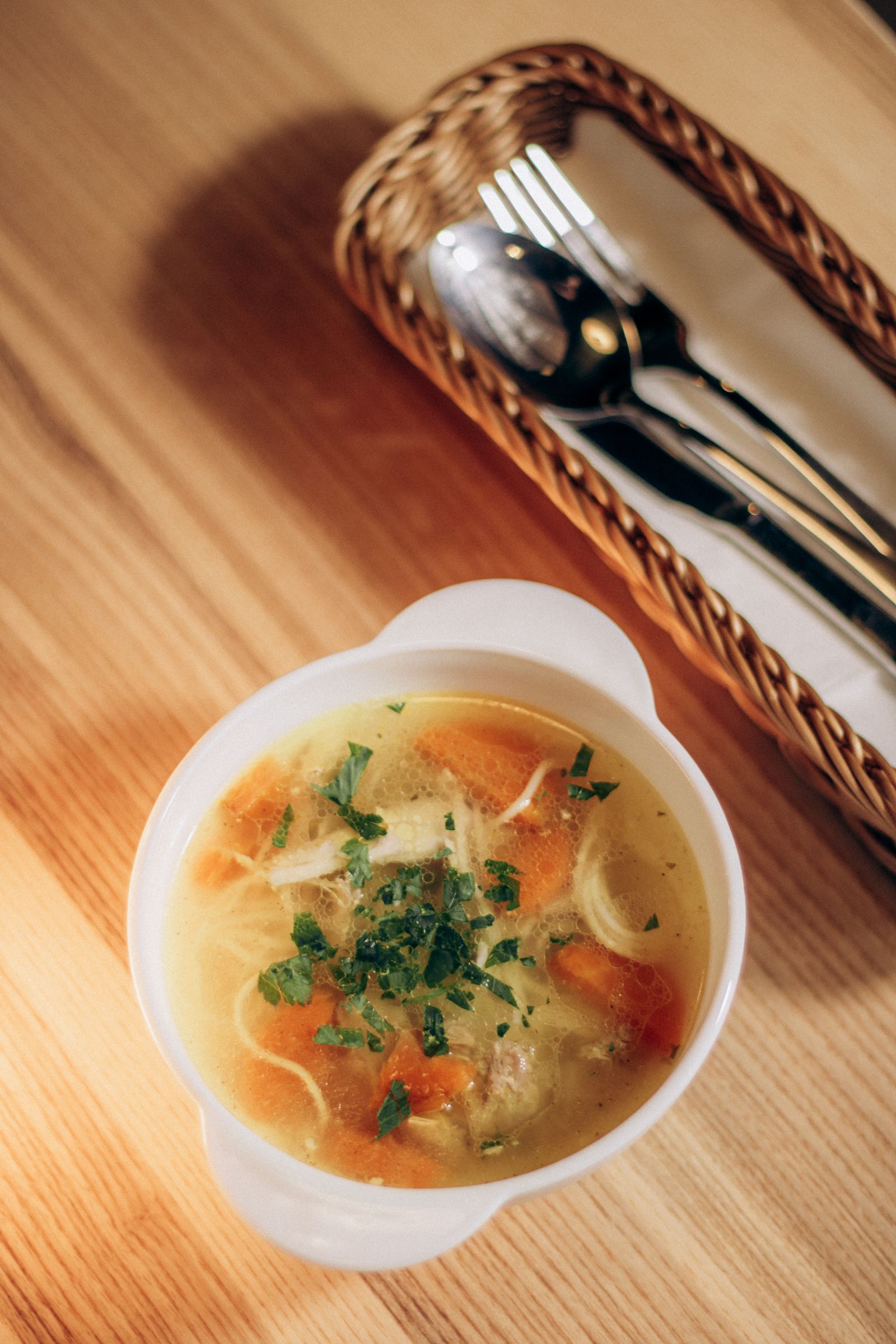
Tested chicken soup recipes are simpler than most stovetop soups. They typically call for cooked chicken cut into pieces, a limited set of vegetables such as carrots, celery, and onion, and clear chicken broth or water, combined so that the jar is no more than about half solids and the rest liquid. That half-solids guideline is part of what makes the tested process work: a jar packed mostly with chicken and vegetables heats more slowly than a jar with free-flowing broth, and an overfilled jar may never reach a safe temperature in the center. Follow the recipe's proportions and fill instructions rather than loading jars with as much chicken as they will hold.
The chicken itself should be cooked before packing, and the vegetables cooked briefly as the recipe directs. Use chicken meat only — no bones in the jar unless the tested recipe specifically calls for them, which most soup recipes do not. Keep the pieces to the size the recipe specifies, and do not add extra vegetables beyond the recipe's list. A handful of mushrooms, peas, or corn may seem harmless, but each addition changes the density of the jar, and a tested recipe is validated only for its own ingredient list. If you want a different vegetable mix, find a tested recipe that lists it.
What never goes into canned chicken soup
Noodles, rice, pasta, barley, and dumplings are the most common problem ingredients, because they are in almost every chicken soup people actually love. All of them swell during processing, thicken the liquid, and change the jar's density, and none of them has a tested processing time in canned soup. The same goes for cream, milk, and butter, and for flour or cornstarch thickeners. A creamy chicken noodle soup is a wonderful fresh meal and a terrible canning project. Can the plain chicken-vegetable soup, and when you open the jar, add freshly cooked noodles, rice, or cream while you reheat it. The served soup tastes exactly right, and the canned jar stays safe.
The same logic rules out canning leftover soup from dinner. Leftovers may contain noodles, dairy, or thickeners, were not packed under a tested procedure, and have an unknown density in the jar. Refrigerate or freeze leftover soup instead. Canning starts from a tested recipe and fresh preparation, not from the pot left over after dinner. Our guide to what NOT to can at home covers the wider pattern, and it is worth reading before you adapt any family soup recipe for the canner.
Preparing the soup for the jars
Work with hot jars, hot soup, and clean equipment, and keep the soup at a simmer while you fill so that every jar starts hot. Ladle the soup into jars, keeping the solids-to-liquid balance the recipe specifies, and leave the headspace the recipe calls for. Headspace matters for soup in particular, because liquid expands and can siphon out of overfilled jars during processing, leaving food exposed and seals weak. Remove air bubbles with a non-metallic utensil, wipe each rim clean with a damp cloth, and apply a new flat lid and a clean band fingertip-tight. Flat lids are single-use for canning; rings can be reused if they are clean and undamaged. If you are new to the canner itself, read pressure canning for beginners first, and check botulism risk in home canning for the plain facts about why these rules exist — not to frighten you, but so you understand what the rules are protecting against.
Jar size and altitude
Use only the jar sizes listed in your tested recipe. A soup recipe tested for pints cannot be moved to quarts on a guessed longer time, and a quarts recipe cannot be shortened for pints on an assumption. Jar size changes how long heat takes to reach the center of the jar, so it is part of the tested process. Adjust the pressure for your altitude as the recipe and your canner manual direct, and have a dial gauge tested for accuracy each season. A weighted-gauge canner needs clean vents and weights, and both types need a good gasket — a worn gasket that will not hold pressure is a failed batch waiting to happen.
Processing and cooling
Set the jars on the canner rack, add the water your canner manual specifies, and lock the lid. Vent the canner for the full time the manufacturer directs before closing the vent or adding the weight: venting drives air out of the canner, and trapped air lowers the temperature inside, which can leave soup underprocessed. Bring the canner to the recipe's pressure for your altitude and hold it steady for the full processing time. If the pressure drops below the recipe's pressure at any point, bring it back up and restart the timing from the beginning — time below pressure does not count, because the food was not at the required temperature.
When the time ends, turn off the heat and let the canner cool naturally until the pressure returns to zero by itself. Do not force-cool it, do not run cold water over it, and do not open it early. Forced cooling can siphon broth out of the jars and weaken seals, and opening under pressure is dangerous. Once the pressure is at zero, wait a few minutes, open the lid away from your face, and lift the jars straight out onto a towel-lined surface away from drafts. Leave them undisturbed for 12 to 24 hours, then check the seals, remove the bands, wipe the jars, and label them with the contents and date.
Storage and serving
Store sealed jars without bands in a cool, dark, dry place, and use them within a year for best quality. Before opening any jar, check the seal and look for bulging lids, leaks, or off smells; discard without tasting if anything seems wrong, using the checklist in how to tell if home canned food has gone bad. Unsealed jars can be reprocessed within 24 hours with a new lid and the full tested process, or refrigerated and eaten within a few days. At serving time, heat the soup to a rolling boil and keep it boiling for several minutes before tasting, as with all home-canned low-acid foods — then add your freshly cooked noodles, rice, cream, or herbs, and serve. That final step is what turns a safe, plain canned soup into the soup you actually wanted.
Common chicken soup canning mistakes
The most common mistake is canning chicken noodle soup as it is served, noodles and all. Next comes water bathing soup, packing jars mostly full of solids, and adding cream or thickeners. Other frequent errors include canning leftovers, skipping the venting step, changing jar sizes, and reusing flat lids. If jars fail to seal, work through why didn't my canning jars seal before the next batch, and never fix a seal failure by reusing a lid. Another quiet mistake is storing jars with their bands on: bands can hide a failed seal by holding a loose lid in place, so store jars band-free and check each seal again when you take a jar from the shelf.
A final mistake is trusting a jar because it "looks fine." A sealed, normal-looking jar that was water bathed, underprocessed, or canned from an untested recipe is not safe just because it sealed. Safety comes from the process, not the appearance. If you realize after the fact that a batch broke a rule — wrong method, wrong jar size, an untested ingredient — do not taste-test your way to a verdict. Discard the batch. The cost of a few jars is nothing next to the risk, and the next batch, done by the tested recipe, will be one you can serve with confidence.
Frequently asked questions
Can I can chicken noodle soup if I add extra processing time?
No. Noodles swell during processing and have no tested processing time in canned soup, and guessing extra time does not make an untested recipe safe. Can the soup without noodles and add freshly cooked noodles when you serve it.
Can I water bath can chicken soup?
No. Chicken soup is a low-acid food and must be pressure canned using a tested recipe. Water bath canning cannot destroy botulism spores in low-acid foods.
Can I can leftover chicken soup from dinner?
No. Leftovers may contain noodles, dairy, or thickeners and were not packed under a tested procedure. Refrigerate or freeze leftover soup instead.
How full of chicken and vegetables can the jars be?
Follow your tested recipe's proportions — generally no more than about half solids, with the rest free-flowing broth. Overpacking solids slows heat penetration and can leave the jar underprocessed.
What if the pressure drops during processing?
Bring the pressure back up to the recipe's pressure and restart the timing from the beginning. Time spent below pressure does not count.
How long does canned chicken soup keep?
For best quality, use it within a year, stored in a cool, dark place without bands. Always inspect the jar before opening, heat the soup to a rolling boil before tasting, and discard without tasting if anything looks or smells wrong.
Comments
Post a Comment
Play nice — spam and promo links are deleted.